Discover the Rich Flavors of Authentic Nigerian Beef Stew
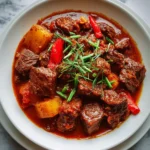
Learn how to make delicious Nigerian Beef Stew. Easy recipe with step-by-step instructions.
- Prep Time: 15 minutes
- Cook Time: 30 minutes
- Total Time: 45 minutes
- Yield: 4 servings
- Category: Main Dish
- Method: Cooking
- Cuisine: International
Ingredients
Cooking this Nigerian Beef Stew is like wrapping yourself in a warm blanket—simple ingredients, but packed with flavor. Here’s what you’ll need:
- 2 pounds beef stew meat (cut into chunks; chuck or sirloin works well)
- 2 large red onions, finely chopped
- 4 cloves garlic, minced
- 2 large red bell peppers, blended or finely chopped
- 2 medium tomatoes, blended or chopped (or 1 cup canned tomato puree)
- 2 tablespoons tomato paste (for richness)
- 1 teaspoon paprika (optional, for smoky depth)
- 1 teaspoon dried thyme
- 1 teaspoon curry powder (adds a subtle warmth—optional but recommended)
- 1/2 teaspoon ground ginger (for a hint of spice)
- 2 bay leaves
- 1/4 cup vegetable or palm oil (palm oil gives authentic flavor, but vegetable works too)
- 1 teaspoon salt (adjust to taste)
- 1/2 teaspoon black pepper
- 1/4 teaspoon cayenne pepper (for a gentle heat, optional)
- 1 cup beef broth or water (for simmering)
- Fresh cilantro or parsley (for garnish)
For substitutions, if you don’t have palm oil, vegetable oil works beautifully and is more accessible. Fresh tomatoes can be substituted with canned tomato puree for convenience, especially during off-season months. I’ve found that a splash of hot pepper sauce can also add an extra kick if you like your stew spicy—just adjust to your taste.
Instructions
-
Start by preparing your ingredients. Cut the beef into manageable chunks and set aside. Finely chop the onions, garlic, and peppers, or blend the peppers and tomatoes until smooth for a more traditional, saucy texture. I like blending my peppers and tomatoes—they give the stew a vibrant color and smooth consistency.
-
Heat your oil in a large, heavy-bottomed pot over medium heat. Once hot, add the chopped onions and sauté until they become translucent and fragrant, about 3-4 minutes. I always make sure not to rush this step—layering flavors begins here, just like my grandma did.
-
Add the minced garlic, thyme, curry powder, and ginger. Stir for another minute until the spices release their aroma. It’s a fragrant stage that always gets me excited, reminding me of Sunday afternoons spent cooking with family.
-
Introduce the beef chunks into the pot. Brown the meat on all sides for about 8-10 minutes. This step develops a rich flavor and seals in juices. I often do this in batches if my pot isn’t big enough—better to brown than to overcrowd, which can cause steaming instead of searing.
-
Pour in the blended peppers and tomatoes, along with the tomato paste. Stir everything together, ensuring the meat is coated well with the flavorful mixture. Cook for about 10 minutes, allowing the acidity to cook out and the flavors to deepen.
-
Add the bay leaves, salt, black pepper, cayenne (if using), and broth or water. Stir again and bring the mixture to a gentle boil. Once boiling, reduce the heat to low, cover the pot, and let it simmer for about 1.5 to 2 hours. During this time, I occasionally check and add more water if needed—patience is key, just like my grandma always said.
-
After the cooking time, remove the lid and simmer uncovered for an additional 15-20 minutes to thicken the stew slightly. The oil should rise to the top, and the sauce will have reduced to a rich, luscious consistency. I love to taste and adjust the seasoning at this stage—sometimes a pinch more salt or a dash of hot sauce makes all the difference.
-
Finish by garnishing with chopped cilantro or parsley. Serve hot over rice, pounded yam, or your favorite side. I usually set the table with a big bowl of fluffy white rice and a side of fried plantains—comfort food at its best.
Find it online: https://artofeasycooking.com/nigerian-beef-stew/