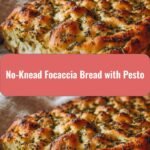
Irresistible No-Knead Focaccia Bread with Fresh Pesto
Learn how to make delicious No-Knead Focaccia Bread with Pesto. Easy recipe with step-by-step instructions.
- Prep Time: 15 minutes
- Cook Time: 30 minutes
- Total Time: 45 minutes
- Yield: 4 servings
- Category: Main Dish
- Method: Cooking
- Cuisine: International
Ingredients
Gathering the ingredients for this recipe is like assembling a little pantry symphony. Everything comes together with minimal fuss, and I often keep these staples on hand because they’re so versatile. When I first started baking bread, I was surprised how forgiving this dough is — it’s almost impossible to mess up, which makes it perfect for beginners or anyone short on time. Here’s what you’ll need:
- 2 ½ cups all-purpose flour (you can substitute bread flour if you prefer a chewier texture)
- 1 ½ teaspoons kosher salt (regular salt works, just adjust slightly)
- 1 teaspoon sugar (a little sweetener helps with fermentation)
- 1 teaspoon active dry yeast (or instant yeast)
- 1 ¼ cups warm water (about 110°F, I usually test with my finger to be safe)
- 2 tablespoons olive oil (plus extra for drizzling)
- ½ cup basil pesto (store-bought or homemade — my grandma’s recipe is my favorite, but I’ll share my quick homemade pesto below)
If you’re feeling adventurous, you can add a handful of cherry tomatoes, olives, or even caramelized onions on top before baking. I often swap out the basil pesto for sun-dried tomato pesto or roasted red pepper spread to vary the flavor. This flexibility is one reason I love this bread — it’s a blank canvas that’s easy to customize based on what’s in your fridge or what mood you’re in.
Instructions
- In a large mixing bowl, combine the warm water, sugar, and yeast. Stir gently and let it sit for about 5 minutes until it becomes foamy. This step activates the yeast, and I always find it satisfying to watch that bubbly magic happen, reminding me of my grandma’s patience while her bread dough rises slowly in the oven.
- Add the olive oil, salt, and flour to the yeast mixture. Using a wooden spoon or a sturdy spatula, stir until the ingredients are just combined. The dough will be sticky and shaggy — that’s perfect. I’ve learned to embrace this rustic texture because it’s what makes the bread so tender and airy.
- Cover the bowl with a clean kitchen towel or plastic wrap and let it rest at room temperature for 12 to 18 hours. This long fermentation is my secret to flavor — I usually prepare it in the evening and bake it the next day. It’s a little like making sourdough, but with less fuss. During this time, the dough will double in size and develop a lovely tang.
- Preheat your oven to 450°F and generously oil a baking sheet or rectangle pan. I like to use my favorite cast-iron skillet or a rimmed baking sheet lined with parchment for easy cleanup.
- Gently pour the risen dough into the prepared pan. Using oiled fingers, spread the dough out evenly, pressing it into the corners. The dough will be soft, so don’t worry if it’s a bit sticky — just give it gentle encouragement.
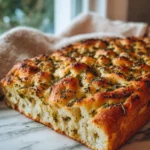
- Now, drizzle a little olive oil over the top and use your fingertips to create dimples all over the surface. This is my favorite step because it’s almost meditative — pressing into the dough makes it look rustic and invites that crispy crust to form during baking.
- Spread the basil pesto evenly over the dough, pressing it gently into the dimples. I love how the pesto infuses each bite with fresh, herby flavor, reminding me of summer afternoons in my grandma’s garden.
- Bake for 20-25 minutes, or until the focaccia is golden brown around the edges and the top is slightly crispy. I often check it around the 20-minute mark, because oven times can vary, and I want it just right — crispy but still soft inside.
- Remove from the oven and let it cool slightly before slicing. Drizzle with a little more olive oil if desired, and serve warm or at room temperature. This bread is best enjoyed fresh, but I’ve also stored leftovers for later — more on that in my storage tips!
Find it online: https://artofeasycooking.com/no-knead-focaccia-bread-with-pesto/